
“This is the story of how six months turned into 16 years…”
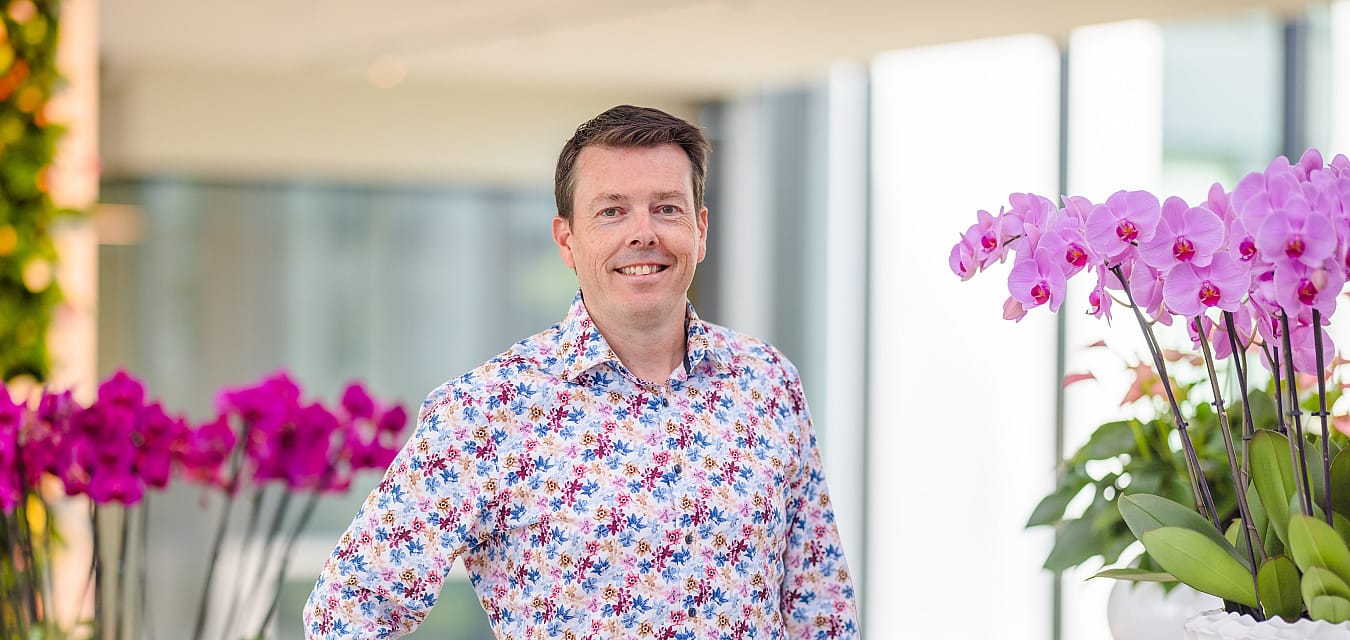
Mads Overmark Jensen has been the General Manager of Anthura in Kunming since April 2025. With over 16 years of experience working in Asia, Mads has a unique story to tell. From his first exposure to the Asian community in Sydney to now leading a global company in the horticulture industry, Mads shares his insights on cultural differences, career transitions, and the challenges he’s faced along the way.
How did a career opportunity turn into an Asian adventure?
“This is the story of how six months turned into 16 years… Back in 2007, I spent my final bachelor year studying in Sydney. There, I made a lot of friends within the Asian community and immediately applied for an upcoming internship at the Danish Embassy in Beijing. Initially, it was just for a six-month period, but the embassy offered me a local contract, which was lucky because, after just three months in Beijing, I met the love of my life (and my current wife). So, I ended up working at the Danish Embassy in the trade council as a commercial officer for one and a half years. During that time, I truly fell in love with China and knew I wanted to build my career here. I realized the key to success would be learning the language, so I was proud to be selected for a full scholarship to study Mandarin while completing my master’s degree. For the next nine years, I worked for two different Danish FMCG companies, with bases in cities like Chongqing, Yinchuan, Kunming, Beijing, and Guangzhou. From 2019 to 2025, I transitioned to a broader role covering Asia, with a base in Malaysia, and now I’ve come full circle, back in Kunming, China, and am truly enjoying every moment.”
What’s the biggest cultural difference between Europe and Asia?
“Very broadly speaking, I love Asia for its dynamic, always-changing work environment—there’s never a dull moment. I admire the positivity and entrepreneurial mindset, which seem deeply rooted in Chinese and Southeast Asian cultures. One major cultural difference is the indirect communication and the necessity of building and operating through a network of relationships. I clearly remember my first meeting in China. Afterward, my Chinese colleagues and I were reflecting and summarizing. While I focused only on the words spoken, my Chinese colleagues interpreted the conversation based on body language, pauses between sentences, and other subtle cues, giving those elements equal importance. It left a lasting impression. Another example is a former European boss who would decline ‘meet and greet’ meetings, thinking them inefficient. His career in Asia didn’t last long because he failed to understand how crucial it is to invest in relationships within the broader Asian context.”
How has working in Asia changed your professional approach?
“I’ve become much more flexible and agile in my approach since working in Asia. By nature, I’m a very structured person, always planning ahead and sticking to the plan. But that approach doesn’t always mesh with local Asian cultures. In Asia, you often have to be ready to adapt, remain flexible, and ‘roll with the situation.’ Investing in networks and taking a proactive approach to engage with various external stakeholders has also been a valuable lesson for me. Over time, I’ve learned that these investments truly pay off in the long run.”

How do you handle the distance from family and friends?
“Luckily, I come from a family that loves to travel and experience new cultures. So, they visit us wherever we are based, and they always encourage us to pursue adventures in exotic locations. Of course, after having children, our kids are 7 and 11 now, it becomes more challenging. It's tough to ensure our children maintain strong connections with cousins, aunts, uncles, and especially grandparents while living thousands of kilometers apart. However, I also feel that the time we spend with close family, whether in Europe or Asia, is of very high quality. When we do meet, it’s often for an extended period, which helps us bond on a deeper level than if we lived in the same city in Europe. We also stay connected by sharing big and small moments through WhatsApp or WeChat groups, which is a constant no matter where we are. Staying connected with friends is difficult, though, as many of our friends are also expats who frequently move. But on the bright side, I can truly say we have friends all over the world, and that’s a great feeling.”
What advice would you give to others considering a move to Asia for work?
“Go for it, and you won’t regret the experience! I’ve been lucky to experience local cultures across markets including China, Malaysia, Sri Lanka, India, Bangladesh, and many more. I would recommend any of these countries in a heartbeat. If you like challenges and constantly changing environments, Asia is perfect for you. I also believe the timing to experience Asia couldn’t be better. Asia’s contribution to global trade will only continue to grow, and now is the time to be in China to witness first-hand the ‘new era’ for China in relation to global trade, geopolitical shifts, technological advances, and domestic economic recovery.”
What has been your biggest challenge, and how did you overcome it?
“In April this year, I relocated back to China to join Anthura Kunming as General Manager after a fulfilling experience at Nomilk2day in Kuala Lumpur. Anthura Kunming is a global leader in the horticulture industry, supplying young plant material to over 70 countries around the world for the cultivation of premium flowers such as Anthuriums, Bromeliads, and Orchids. After a career in commercial roles in sales and marketing, transitioning to general management for a company employing many hundreds of people, and playing an important role in the local community, has been my biggest challenge. On top of that, getting to grips with a- to me- new industry has been daunting. But I am incredibly grateful for the opportunity and the trust shown by Anthura. I’m excited to work with our talented local team to elevate our China operations, while navigating the unprecedented challenges of today’s macro business environment.”
What has been your biggest success so far?
“I would like to think that my biggest success is measured by the number of people’s lives I’ve impacted. I’ve had the opportunity to live and work across multiple countries, interacting with people from diverse backgrounds, cultures, and nationalities. I’d like to think that my greatest success is the equal impact I’ve had on those I’ve worked with and collaborated with throughout my career and vice versa.”
Mads' journey is a testament to the power of embracing new cultures, being flexible in your approach, and the importance of relationships in the business world. If you’re considering working abroad, especially in Asia, Mads' advice is clear: seize the opportunity. The experiences you gain can shape not only your career but your personal growth in ways you never imagined.
Are you ready to embark on your own international adventure? The world is waiting for you!