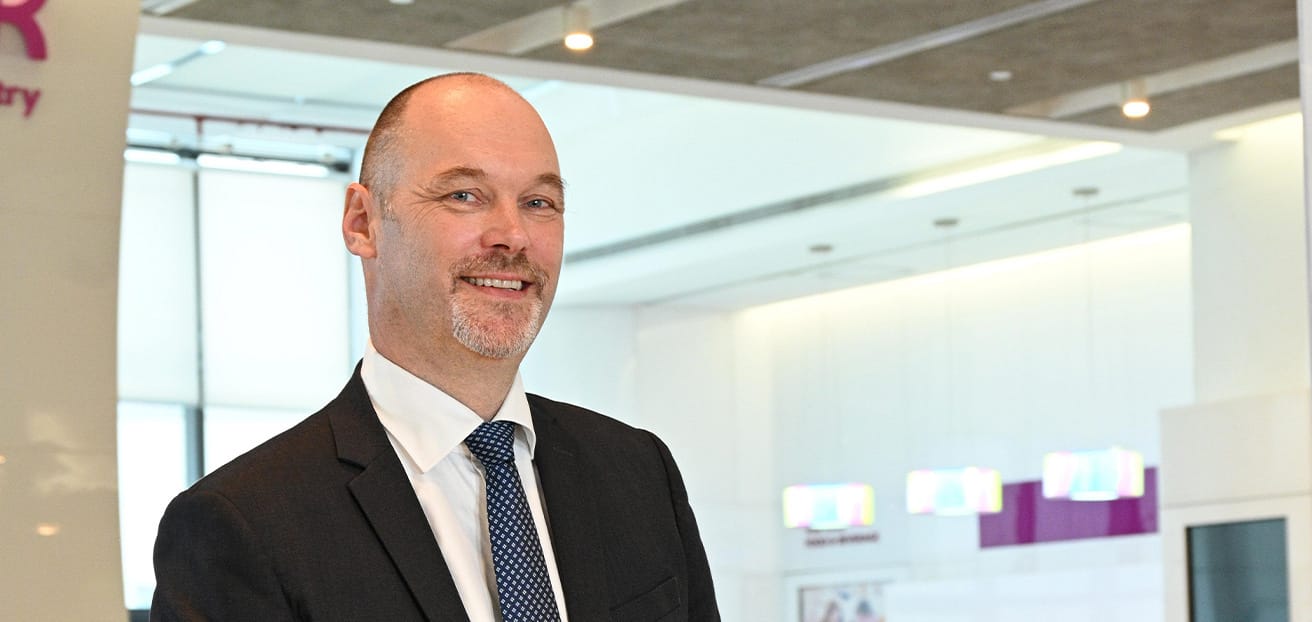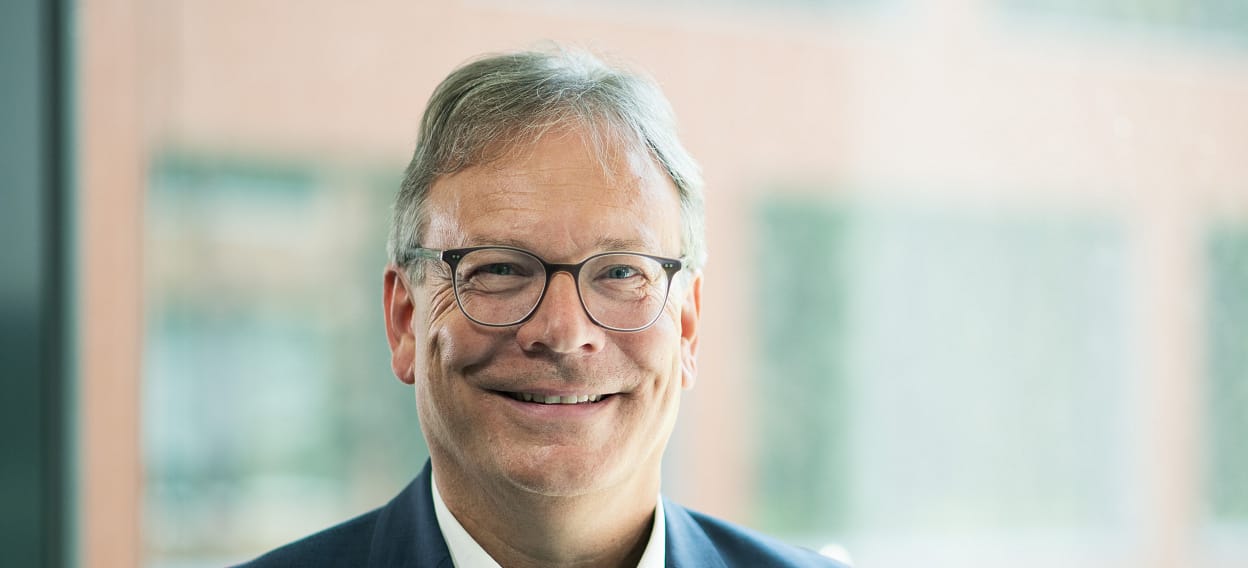

Nicole Rudningen – Global Head of EHS and Project Director for Care Solutions, Evonik
‘An effective and strong EHS culture is the basis for the rest of the business. The foundation for growth.’ And Nicole Rudningen should know. As Global Head of EHS she is initiator of the culture shift at Evonik.
Nicole rudningen - Global Head of EHS and Project Director for Care Solutions
The American Nicole Rudningen has been working at Evonik for 23 years now, including two separate international assignments to Germany. With a degree in biotechnology, she first cut her teeth in quality, then after making the step to R&D ended up managing a production location a couple of years later. In 2018 she became Global Head Environmental, Health, Safety, Quality and Regulatory for Animal Nutrition. She is ultimately responsible for all processes on all production sites worldwide.
That’s a very broad level of responsibility. How do you manage that?
‘That broad overview makes the position appealing to me. Thanks to my background, I knew a lot about quality, management systems and production and I had the technical know-how. I had the least expertise in the topic of regulatory, to be successful I had to relay on my management skills. By the way, nobody expects you to be an expert in everything especially with such broad responsibilities. It’s all about asking the right questions, supporting your team, listening to them and understanding the technology. You help people find solutions to issues they face in their work. So you grow into it too.’
In addition to the German site, Evonik has factories on all continents. What’s it like to manage so many different cultures?
‘In cultural terms, challenging. I manage employees at production sites across the world: Singapore, Brazil, Antwerp, Spain, the United States… it’s a mix of cultures and colleagues. Just so much fun and really dynamic! Thanks to the huge variety of cultures, each country has its own different style of leadership. And that makes this job extra interesting.’
A lot has happened in recent years in the management culture. What exactly?
‘At the heart of it is a shift in culture. Better safety performance, both operationally and individually, is only achieved with an open culture and an atmosphere of trust. Only then can you prevent accidents. And if accidents do happen, it’s all about finding out what the cause was rather than apportioning blame. And leadership style plays a crucial role in this. If you want to be successful, you have to reach out to people. In Animal Nutrition we follow the simple safety motto: We take care of each other. If you see something unsafe, you need to dare to say something. Not like “you’re doing something wrong” but out of genuine concern “because I care about you”. We have done a lot to get everyone to internalise this approach.’
Where will the focus lie in the coming years?
‘The goal is zero accidents and incidents. To achieve that, we must continue to focus on that open culture, on prevention and proactive behaviour, on the ability of people to identify and eliminated risks. This requires a certain degree of resilience, both personally and within the overall organization. One challenge associated with safety performance is that you are always working on accident prevention, and preventative actions are hard to measure. That’s something I had to get used to. To help myself and motivate others I like to think about the fact that in a proactive safety culture you will never know what you prevented, because the goal is zero.’
What is the position of EHS in the organisation?
‘An essential one, as an effective and strong EHS culture forms the basis of the rest of the business. It forms the foundation for growth. If this is not done properly, you risk everything. Conversely, you can really make an impact here. From this critical key position, I take a strategic view of the well-being of our employees, the community, our customers, our operations and sustainability. The products we produce contribute to a socially responsible and sustainable protein production, which feeds the world, for me that’s really purposeful.’
I hear sustainability. So how’s that going?
‘The question of how we as a company can contribute to the Sustainable Development Goals of the United Nations is very real to me. For example, we use sustainable sources in production, we produce animal feed and additives that support sustainable livestock farming and improved animal welfare. On all these fronts, we pursue cooperation with market players and authorities in order to make real progress.’
How does Evonik support its (female) talent?
‘Evonik has a talent group, which gives you the opportunity to grow and learn. Your performance and potential are leading factors here. What I personally find really great is that Evonik gives you the chance to do things that you have never done before. You often hear “you did this well and we think you will also do that well, even if it is not directly in your area of expertise”. Other companies tend to limit you if you don’t have the right profile. I’ll soon be starting as Project Director for Care Solutions, responsible for a large capital investment project. This helps you grow into different positions and in different countries, making you a well-rounded person. And that really appeals to me. What’s more, my career has had an amazing impact on my family. My three children are true global thinkers with real global context. Working for an international company such as Evonik has hugely enriched our lives.’
Isn’t feed a rather male-dominated sector?
‘It was. I used to be the only woman and the only international member of the management team, however in the last two years we now have three women and two international management team members. Diversity is also about different cultures and different styles of communication. The setting is becoming increasingly global. And a global business needs a global team. A group with a global understanding of different cultures is very valuable.’