“You don’t need any fresh water to feed the fish”
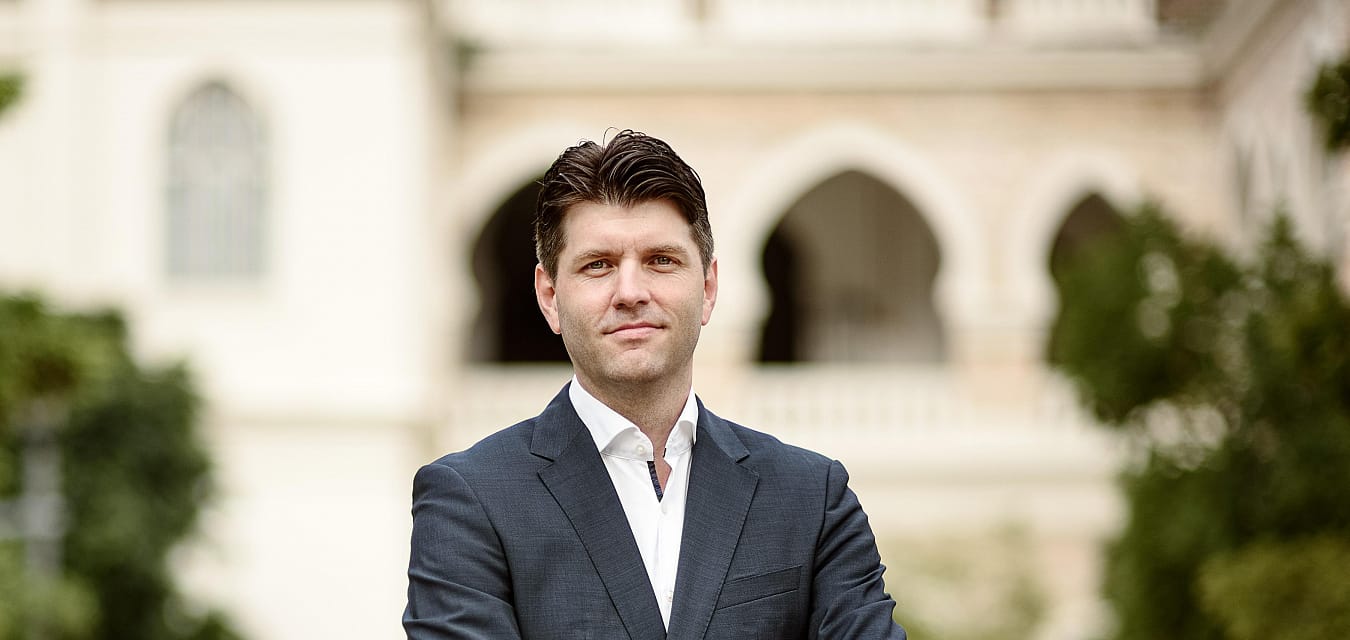
Have you ever wondered how many litres of fresh water does a dry cow drink per day? 57. Could you guess for a milking cow? 130! How about a 100 kg pig? 9 litres of water per day. And what about marine fish? Practically none. You don’t need any fresh water to feed the fish and that’s why with the global problem of water scarcity, farming seafood is the only sustainable way forward, opines Dr. Serge Corneillie, an aquaculture expert currently based in Vietnam.
Speaking to Serge about aquaculture, or the cultivation of seafood, is a deep dive into an industry that is interesting, dynamic and sometimes misunderstood. ‘Unlike land animals, marine fish does not require any fresh water to survive, hence it will become an essential source of protein in a world that is being increasingly affected by water scarcity’. As the Head of Aquaculture Division for the Philippines-based 1 Food Group, he is responsible for the production of aquaculture feed in Vietnam, overseeing a production capacity of 300,000 tonnes of fish feed per year to meet a growing demand.
Why is aquaculture so important?
‘We all know the story about the growing world population, and that the population needs to be fed. People generally want to eat more meat and protein. When we say meat, we think of beef, pork or chicken, however fish is considered as the healthy meat product. That’s the part where aquaculture comes into focus as the protein source of the future. The global fish volume provided from fishery and culture is already now bigger than pork or chicken. There are a number of reasons for that, but the three most important ones are sustainability, efficiency, health.’
‘Let me explain the first reason of sustainability. We need 3-4 kg of feed to produce 1 kg of pork or 2 kg of feed to produce 1kg of poultry, whilst for fish, for example salmon, we need on average only 1.1 kg of feed to produce 1 kg of salmon and only 1.5 kg for tilapia. This means we have 2-3 times more efficiency in turnover from raw materials to meat.’
Second reason is water efficiency. One of the biggest issues that we surely have with global warming is that in many regions fresh water becomes more and more scarce. For land animals you need a huge amount of water per day, but for marine fish you basically don’t need any fresh water at all. Let’s say, marine life lives in sea water which they can filter to fresh water, so marine fish literally drink that water, you don’t need to give them extra fresh water like you do to feed land animals. Also, the usual water content in a feed for fish is about 10%. If you have one tonne of marine fish and they eat about 50 kg of feed, that means you only need 5 litres of fresh water for one ton of fish per day. That’s 10 times less water consumed compared to land animals.
Third reason, which I also find as the most important one is the health aspect. If you look at our brain, it contains about 60% fat, out of which 10-20% is DHA. We cannot produce DHA ourselves; we theoretically can produce a minimum amount ourselves, only 0.01 % from linolenic acid elongation, but that is far from sufficient. There are only three real sources of DHA: fish, eggs and algae. One more thing, it is scientifically proven that consumption of DHA or fish can reduce the risk of getting some brain diseases. So, if you buy omega-3 supplements, make sure it contains DHA, as you need 250 mg of DHA per day.’
People still believe that wild caught fish is a better option than farmed fish. Is that true?
‘There is only one truth and that is, both, wild caught and farmed fish are equally healthy. Having said that, both are overall excellent products for our health. People also often say, farmed fish has a lot of antibiotics, but I’m sorry that’s absolutely not true! Yes, in the past we were treating animal diseases, including fish, with antibiotics, but that changed a lot in the last two decades, due to the use of vaccines and the increased use of certain feed additives that can really reduce diseases in fish. We have very good results using pre and probiotics instead of antibiotics. We also started to use fermented yeast extract, which is proven to significantly reduce the impact of diseases. So, we don’t need antibiotics anymore.’
‘It’s interesting to mention, when you import fish to Europe or USA, the Government and its relevant bodies are checking if there is any trace of antibiotics. If there is any trace of antibiotics found, the farms will lose their export license, so it is strictly controlled. And trust me, nobody wants to risk losing their export license. So I would say that it’s perfectly safe and actually recommended to eat both, wild and farmed fish, at least twice a week.’
What about the concern of high mercury levels found in some fish species?
‘That’s a very interesting question because mercury is specifically found in large wild fish. I can assure you, mercury can’t be found in farmed fish, but only in wild species. Farmed fish is growing in a controlled environment where you also control the feed. The feed is mostly made from raw materials coming from South America, countries like Brazil, Argentina and Chile, where there is fewer heavy industries, and the nature is typically free of persistent organic pesticides. When it comes to wild fish, most mercury is found in big fishes like sharks, sword fish or tuna. I agree, you may have an issue if you eat, let’s say, half a kilogram of tuna every day. But if you spread a can of 150 g of tuna over your salad once or twice a week, it’s still perfectly fine to consume it.’
What are some challenges with farming in the sea?
‘The major challenge in aquaculture production is diseases. Today, we still have a lot of production loss and mortality because of diseases that affect 20 to 30% of fish. That’s something different compared to land animals, as they are commonly farmed in indoor facilities, where strict biosecurity measures can be implemented. We are not there yet in aquaculture, but we’re getting there. We need to switch to a closed environment culture one way or another if we want to keep diseases under control, because new diseases just keep coming up.’
What do you mean when you say farming fish in a closed environment? Is there any innovation in the pipeline?
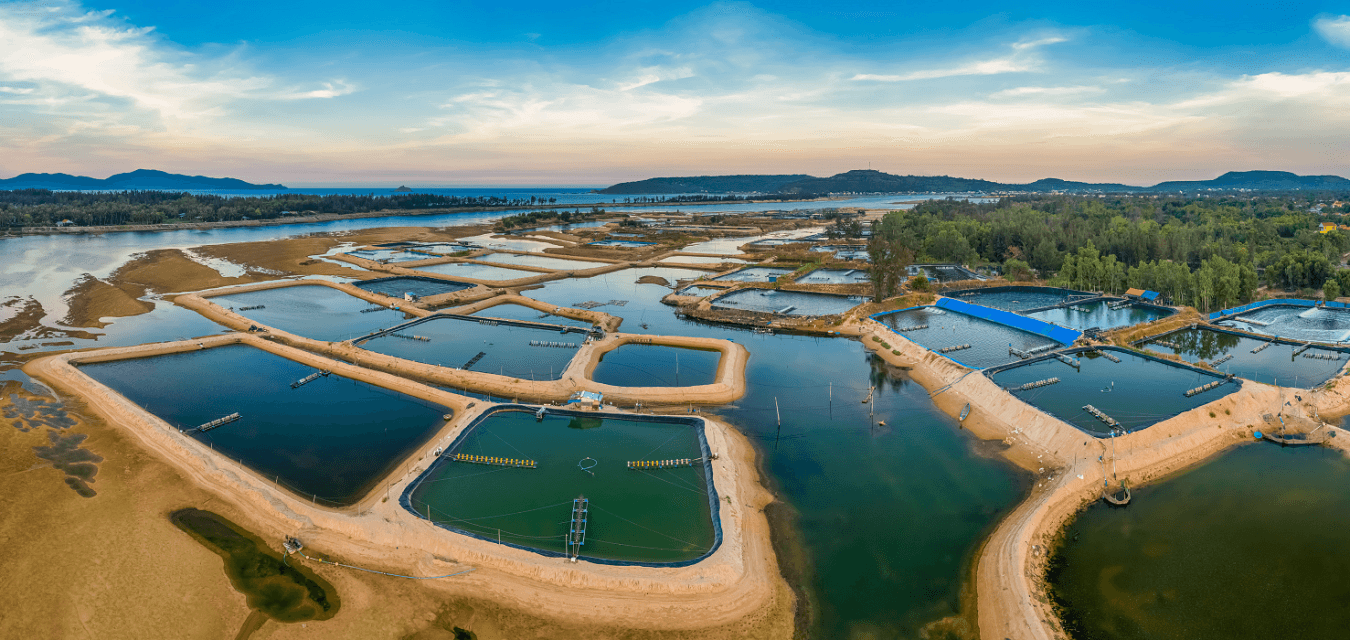
‘There is a lot of investment in Recirculating Aquaculture Systems, known as RAS systems. That’s a new way to farm large volumes of fish. Instead of the old-style method growing fish outdoors in ponds or in cages, this is a new way of growing fish in indoor tanks under a controlled environment. It surely is a very interesting way to control diseases, but today’s technology is not completely ready. There has been RAS systems used in several aquaculture species for many decades, but mainly for small operations averaging a hundred tonnes or few hundred tonnes per year. That’s way too small. We need to operate on a mass scale like 5 to 10 thousand tonnes, which is a challenge at the moment. We will surely get there, but we still have some technology issues to overcome. In the meantime, there is also an alternative method, that I personally am a big fan of - bag cages in the sea. Instead of the net, we started using a closed bag, where you pump the water, and it flows out by itself. I believe this is probably a faster way to have a kind of combination between low cost and high biosecurity, because you can sterilise the incoming water with ozone or UV and cultivate the fish in a much more protected environment. In such a manner, you avoid diseases, and you still have a benefit of producing big volumes at a much lower cost. If I’m being honest, I’d prefer this over the RAS systems.’
Could you compare aquaculture in Asia to the rest of the world?
‘The use of aquaculture technology is still a little low in Asia compared to marine fish technology and salmon farming technology in Europe. In Asia the bulk of aquaculture is based on pond culture, whilst in Europe it’s mostly cages in the sea. That is the main difference. It is important that Asian cultures learn that in the pond farming method, you have to make sure that the pond is completely dry and empty for a couple of months before they restock, in order to reduce the impact of diseases. There are number of practices where this is quite normal for example in salmon farming in Norway known as fouling, but it doesn’t happen a lot in Asia yet. Only some advanced farms in Asia are doing environmental control properly, whereas others are still far behind. Another point is the how data collection and interpretation of these data is used in Asia, it’s necessary to comprehensively understand the impact of feed ratio and other factors on productivity.’
‘One more difference is for example how the Japanese people harvest fish to reduce the negative influence of stress on the meat quality. This is the Ike Jime method, slaughtering fish to preserve flavour. Also, in Japan, people make sure that the fish is harvested and consumed within 12-24 hours. The freshness and the quality of the fish is very high. Japanese people really put in their knowledge when harvesting fish. But in Norway as well, salmon is stunningly harvested in a low stress way. The method of serving super fresh fish in Japan is surely something that is advanced compared to the West.’
Now that you mentioned Japan, you lived there for 20 years, and your wife Hitomi Oki is Japanese. It seems like you could you share with us some interesting things about this fascinating country?
‘Japan is indeed a fascinating country with a strong work ethic. It’s not the most relaxing atmosphere as all the intention goes to your work. When I first started working in Tokyo more than twenty years ago, my working day would start early at 6 o’clock, then I would finish at five o’clock in the afternoon and go back home. My wife would then say to me It’s embarrassing that you are coming home that early, the neighbours would think you are a loser. By the way, in Japan there is no 5-day work week in agriculture, by law it is still a 7-day work week. That says enough about the Japanese culture.’
‘It’s also interesting that for Japanese people the weekend is not there to go out and have fun, but to rest. My wife was a teacher and at her work there was a guy from New Zealand, so every Monday morning he would ask my wife How was your weekend? That is a very normal question in Western culture. But not in Japan. My wife couldn’t understand why he was asking her about her weekend, because for Japanese people Sunday is not for fun, but a day for resting and preparing yourself for the next working week. So, if you want to live and work in Japan, then you better enjoy working hard, otherwise you will not make it there.’
For the past three years you are living and working in Vietnam, but your wife and kids are back in Japan. How does that work for your family?
‘There is an old Japanese saying that goes: my husband is healthy, my husband is not home (at work) That’s perfect!’
‘Japanese women don’t have the concept that husbands need to be at home every day. Wives are the ones who stay at home, taking care of kids and family, whilst husbands are working, to provide for the family. Hitomi and I are perfectly fine with that, so are our kids Michiko and Kai. Our daughter Michiko is at Uni now, she already turned 20 and younger son Kai is at the moment doing final preparations to apply for Uni. Once in two months I fly back to Tokyo and spend some time with my family.’
How’s life in Ho Chi Minh city?
‘Great! I love it! Ho Chi Minh is lively and let’s say chaotic from 5 in the morning until midnight. When I think about it now, I don’t even know if people here ever sleep, that’s how full of life this city is. I went running this morning at 5 o’clock and saw other people playing tennis, bicycling, doing exercise, even dancing. This is a society that is super active and that’s why I believe Vietnam will be the most successful country in Asia. Their work ethic is intense, and it includes working in a company, working on your health and working on your relations. On top of that, the weather is always nice and warm. Food is one of the best in the world. The beer costs half a dollar. I usually say when I retire I need only a dollar per day. I just go to the beach, watch the sunset and enjoy a beer or two. I mean I can also do that in Belgium, but the beer will cost double the price there and the beaches are not as nice as the ones in Vietnam. Overall, Vietnam is the best place to retire in!’
Will you retire in Vietnam then?
‘Unfortunately no. I will retire where my wife decides we should retire.’
That’s a perfect answer of a successful expat! Happy wife, happy life. So, where would Hitomi like to retire?
‘It will probably be the island of Shikoku, where Hitomi is from and where I saw her for the first time more than two decades ago. At the time I was working in France for the French division of the Nutreco company, who expanded their business to Japan and so they asked me to move to Shikoku island and support the team there. One Saturday evening, a basketball match brought Hitomi and me together and the rest is history. I suppose this will be the most logical step once we retire, we go back to the place where everything began. I consider Japan my home, my kids also consider themselves Japanese, even though they were both born in Belgium. We speak Japanese at home, so I don’t have any problems with retiring in Japan, especially in the beautiful island of Shikoku. My only complaint would be that the beer there is triple the price compared to Vietnam and double the price compared to Belgium.’