“Don’t let society’s expectations or your own doubts define your limits. Believe in yourself, embrace opportunities and never decide what you cannot achieve before you even try.”
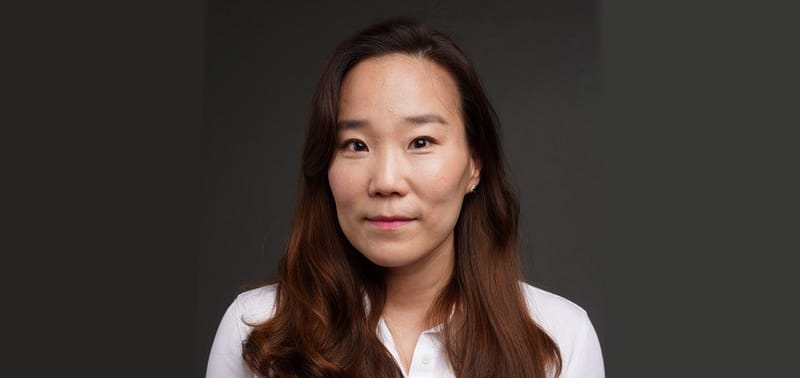
From the humble beginnings as a barista in Korea to becoming the Chief Operating Officer of one of Philippines’ most beloved dining institutions, Kay Lee is a prime example of a woman that has cultivated success beyond borders. Currently working in Manila for Max’s Group Inc., Kay is aiming to bring the Filipino-style casual dining experience the world over.
kay lee - Chief Operating Officer International
The story of how Max’s Restaurant became one of Philippines most iconic dining destinations is a tale of modesty leading to success. It began after World War II, when a Stanford-educated teacher Maximo Gimenez started to host American troops in his home in Quezon City. Max had the advantage of speaking fluent English across various topics, which the Americans appreciated, along with his hospitality. These casual gatherings, often over a few drinks, also came with fried chicken made by his niece Ruby. Over time, the troops insisted to pay for their drinks and meal, which eventually inspired Max to open a café, that was named Max’s Restaurant.
‘What started as a humble café is now the biggest casual dining group of companies in the Philippines.’ Aside from Max’s Restaurant, Max’s Group Inc. also operates Yellow Cab Pizza, Pancake House, Sizzlin’ Steak and Teriyaki Boy among other eateries. Though most of the business is done in the Philippines, the company is also present in United States, Canada, the Middle East and selected Asia-Pacific regions. ‘I handle these brands’ global operations based on a franchise model, where we work with partners in developing and delivering much-loved Filipino cuisine to an international audience.’
What makes Max’s Group Inc. restaurants different than other eateries?
‘Max’s restaurant is really an iconic brand in the Philippines. If you ask any Filipino if they know about Max’s restaurant, they’ll be very excited to tell you the story of its origins and their own experiences. We are famous for our Filipino style fried chicken. Our chicken is not breaded, which makes it somewhat healthier and lighter. The thin chicken skin is very crispy on the outside, but tender and juicy on the inside. We even have a phrase to describe our famous Max’s fried chicken “Sarap to the bone”, which means “Delicious to the bone”, because you can literally lick the bone.’
Currently Max’s Group Inc. operates in Asia, Middle East, United States and Canada. Are you planning to expand to Europe?
‘Europe has been on our radar for quite some time, especially Italy and United Kingdom, where there is a big Filipino community. We would like to expand our businesses to these two countries, with our flagship Max’s Restaurant brand first. But as our business model is master franchise, we are diligently working to find a partner who can bring and expand the brand there with us. We are still searching for the right partner and as soon we find one, we would definitely bring Max’s Restaurant to Europe.’
Is it true that in the Philippines, it is more likely that your boss will be a woman, rather than a man?
‘Yes, absolutely. In the Philippines you see more women in the work force than men. I was very surprised when I first joined Max’s Group Inc. and discovered that there are a lot of women in leadership roles. That was a sign for me that I could grow within the company. Currently, in our company core management team of 19 people, 10 of them are women. But honestly, that’s not the case only in our company. I see a lot of women in high positions in other companies in the Philippines, it is commonplace here to give leading roles to women, as well as hiring from the LGBT community. That’s something very rare to see in other Asian countries, especially Northern part of Asia like Korea, Japan or China.’
As a woman leader, is it important to have more ladies in positions of power?
‘As Obama once said, “The world would be a better place if run by women” and I couldn’t agree more. There’s a fundamental difference between men and women in terms of how they process things. Women are naturally better listeners than men, and when you become a leader, what you hear is more important than what you say. You have to understand your team and the best way to do it is to just listen. Also, it’s proven that women are better in reading non-verbal language to interpret a person or situation effectively. They listen first, understand and then they decide, rather than just jump to action. These things can make female leaders sometimes better than men I feel.’
Have you experienced any resistance when you are leading men?
‘Luckily, I haven’t experienced any obvious resistance. When I was working in Korea, I had male team members reporting to me, but they were usually younger in age and seniority. In the Philippines though, it seems age is not as important as it is in Korea. I have male team members who are actually older than me and working with them is perfectly fine. But I think I’m not acting like their boss either, I try to be equal because we all are individual contributors to the same goal. I’m leading a small team and we all work together. I work with them, rather than ask them to work for me.’
Would you have achieved the same level of career success if you would have stayed in Korea?
‘I think eventually I would have, but it would have probably taken more time. Like I said, Philippines is more open to giving a chance regardless of gender, age and seniority. In Korea that’s not always the case, even though it’s changing nowadays. But definitely women in the Philippines could reach higher positions much faster than in Korea.’
You climbed the corporate ladder in a very impressive way, starting as a barista at The Coffee Bean & Tea Leaf and becoming a high-profile manager at the global company. How was that journey?
‘Honestly, I didn’t plan for any of this, certainly not to become a COO. I was initially aiming to do a master’s degree in the US, and I had some downtime. So as a coffee lover, I applied for a job as a barista at The Coffee Bean & Tea Leaf as I wanted to learn how to make good coffee. As a growing company in Korea at the time, they then offered me a role to train new baristas at the HQ office, which I accepted to save more money before I furthered my studies. But then I was continually offered new roles in The Coffee Bean & Tea Leaf, like in marketing and customer relations, I eventually decided to stay on and work in Korea. Some time later, I got an offer from another company to work on a project to bring Krispy Kreme to Korea. I joined the team, but then after few years and opening more than 50 of Krispy Kreme stores, I wanted to challenge myself again, because staying at one company for a long time was not my desire at the time. When the opportunity to work with Max’s Group Inc. came along, I didn’t hesitate to join them. I knew how they treat their employees from my days with Krispy Kreme Asia Pacific, and I knew that was the place for me to move my career forward.’
What is your advice to all the aspiring and future female leaders?
‘There are some strict social norms for ladies that society expects them to follow. At certain age you should get married, and then followed by having children. Then the focus switches to parenting, which usually means the women have to give up or scale back their careers. Naturally, these expectations put a lot of pressure on women, creating self-doubt and insecurities at critical points of their career. It’s important that women don’t draw the line between what they can and cannot do before trying it. Don’t doubt yourself too much, don’t ask yourself too many questions and if you get a good job opportunity that you desire, then you have to grab it.’
You moved from your native country South Korea to the Philippines. How would you compare living in Seoul and living in Manila?
‘I always wanted to live and work abroad and to travel a lot. That’s why it was never a hard decision for me to move to another country. Also, the fact that Philippines is only 4 hours away from Korea made the decision to move easier. Once I moved, I experienced so many differences compare to Korea. In Korea, everything can be done with just a click, everything can be delivered on time, internet is the fastest. While in Manila it takes ages to just download one episode on your computer. But then, people in the Philippines are just much happier than the Koreans. They are less stressed and smile more, in fact when I think about it now, Korean people actually don’t smile much. And that’s something that makes me really happy, to see people smiling everywhere I go. Another thing is transportation, in Manila there is no public transportation, you need to have a car and traffic is so bad. While Korea has one of the best transportation systems in the world. Despite the differences, I like both places equally. When I’m in Manila I miss Seoul, when I’m in Seoul I miss Manila.’
We know that family relations in Asia are more important than let’s say in Europe. How did your family react to your move to another country?
‘When I first told my family about my plans to move to the Philippines, they were not so thrilled about that idea at all. There is often news on television that Korean people get robbed or shot in the Philippines, so they were worried about my safety. But at the end of the day, my parents always listen to me and respect my decisions. When I went to the Philippines to find an apartment and organise everything for my big move, my Mum came along. Visiting Manila and meeting the people definitely made my Mum more comfortable with my decision. And now both of my parents love to visit me in Manila and spend time here.’
You are a very busy lady, so when you have some time off, how do you spend it?
‘I like reading books. I have a huge library and a good book is something that can always make me happy. I also enjoy cycling on weekends and of course café hopping, thanks to my love of drinking coffee. Unfortunately, there are not many good coffee shops in Manila, but I did find some nice ones that I regularly go to.’
What are some of your business goals?
‘At the moment, our company has 62 stores worldwide and we would like to increase that number to 100 by 2024. Also, one of our long-term goals is to make a footprint in the global food industry. Filipino cuisine is not as known as for example Vietnamese or Thai, so we’re trying to bring traditional Filipino food closer to our non-Filipino customers.’
And your personal goals?
‘To stay healthy and contented, while travelling more for leisure. I travel a lot for work, so in the future I would like to visit some places that are on my bucket list and just enjoy the experience, like Egypt or wineries in California and France. I have an agreement with my sister that for her 50th birthday we will go to Peru. That’s a big adventure and I exercise a lot so that I can be fully ready to climb Machu Picchu.’
Does the idea of living and working in Asia for an extended period of time appeal to you? If so, send us your details so we can consider you for future opportunities or apply for one of the current vacancies on nomilk2day.asia.nl