
“From a small Turkish service shop to a global player in centrifuge technology.”
Coffee is an essential part of Turkish tradition. The dark brown beverage is usually served with a small dessert called lokum and a glass of water on the side. This is exactly how I was welcomed into the house of Olgun Ugurdogan - with a cup of coffee and lokum. As I sipped the hot drink while savouring the sweet treat, Olgun was proudly talking about the company he works for - Haus. From its modest beginning as a small Turkish olive oil machine service shop in 1954, Haus emerged into a big player in the centrifuge industry, and has since strived to be the market leader in the centrifuge business.
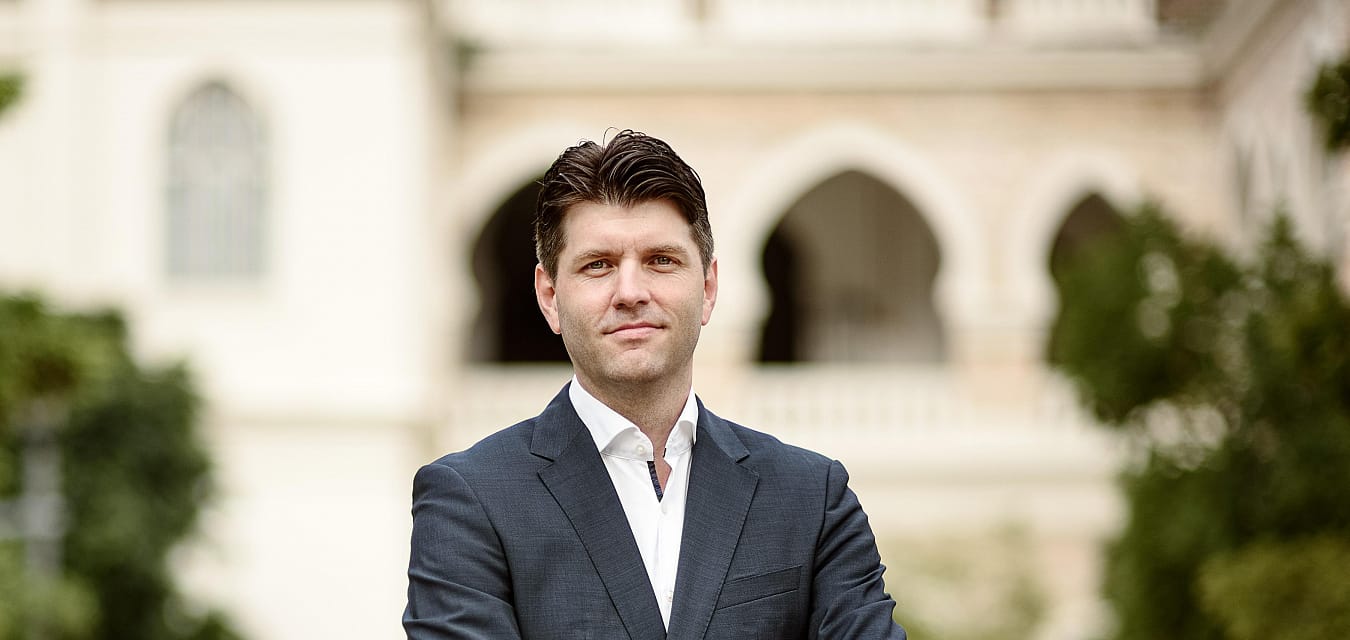
Olgun Ugurdogan - regional manager
As Haus was growing, the company decided to open its first office outside of Turkey and Europe. After a lot of research, a decision was made, the new office should be launched in Kuala Lumpur and Olgun was appointed to carry out the mission - set up and run the business in Malaysia. After a very successful start, company decided to open another office in Bangkok, so Olgun and his family packed their bags and started a new chapter in Thailand.
It seems that Haus is focusing more on Southeast Asia. Why?
“The timing was just perfect! We realised that the palm oil industry is growing big and of course, if something looks promising and shows long-term viability, you just want to be part of it. As Haus already has extensive experience in the olive oil industry, we took a chance on palm oil, which by the way, is the number one vegetable oil in terms of production. The demand is quite high, even more than olive oil or sunflower oil. I should also add that 95% of the world’s palm oil production is done in Southeast Asia. To be more precise in three major countries: Indonesia, Malaysia and Thailand. We knew we should be somewhere there, but where? At that time, we excluded Thailand, because of the language barrier. Indonesia is a pretty massive country for business, so we decided to go for Malaysia, which has a very attractive investment climate for foreign businesses.”
But you still opened one more office in Bangkok. Does that mean the palm oil industry is booming in Thailand as well?
“Exactly! Let’s say that Thailand has just entered the game and we, again, wanted to be part of it. For example, Indonesia has over one thousand palm oil mills, Malaysia maybe four hundred, whilst Thailand has only seventy mills. As you can see, timing was just right for us, and we are slowly building our business in Thailand.”
After opening the office in Thailand, what are the next steps Haus will make?
“Our next step will definitely be South America. We are currently exporting our equipment to Chile, Argentina, Brazil, almost the whole region. Unfortunately, we don’t have the office there yet and we should change that. Business is rapidly growing, and we need to be present in South America. By doing that, not only we’ll be close to our customers, but we will be able to give them all the support they need in running their business smoothly. At the moment, we are trying to decide which country should be home for our next office, but it will probably be somewhere like Brazil, Chile or Argentina. North America is also in our future plans, but South America first, and then we’ll go up north.”
Any new products on the horizon?
“We are already experts in decanter separators, but we are also looking into some other types of centrifuges that we would like to manufacture, like nozzle separators. The thing is, as technology evolves, the same happens with the centrifuge industry. You can’t keep the same old design, you constantly need to provide something better. For example, customers nowadays are very concerned about energy consumption, which is why we are continuously trying to come up with better solutions in making machines with lower energy consumption. We are constantly working on these kinds of improvements to make our customers happy, but also to challenge our competitors.”
Haus is also building a new factory in Turkey. Could you tell us more?
“I’m glad you mention it, because that is a huge achievement that all of us are so proud of. The new factory in the town of Aydin is almost finished, it will be one hundred thousand square meters big and slated to be one of the biggest centrifuge manufacturing plants in the world. Official opening is scheduled in February and the production capability will be an impressive one thousand decanter per year, which is three times more than our previous capacity. This will help us in reducing delivery lead time to our clients, something that we struggled a lot with before.”
What is something that Haus is doing differently compared to your competitors?
“There are three things that we do differently: price, service and relationship. Our price should be lower than our competitors’ and we always try to meet our customers halfway and to offer them fair and reasonable prices. Service is also very important to our customers, it’s similar to buying a car. When you get a car, your priority is to check for the level of service, where is the closest service centre, how fast they can fix the problem with your car and how expensive or cheap the maintenance of your car will be. Same for our customers.
Lastly, but I’d say maybe even the most important thing is the relationship, especially here in Asia. Trust is very important in this part of the world and if you are to build any kind of relationship, it needs to be based on trust. I always assure my customers that they can trust Haus and they can trust me. I visit all of my clients in Southeast Asia on a regular basis, my phone is always available for them and in case of any problem I ensure I have an action plan for customers as soon as possible. Our mission is not only to sell the machines. No. It’s primarily to build strong relationships with mutual respect and understanding. We want to see customers happy because happy customers equals long-term business.
Let’s talk a bit about your family. You are from Turkey, and your wife is from Brazil, how did that love happen?
“My wife went on a long European trip that ended in Turkey. I saw her in Istanbul and I’m not ashamed to admit that it was love at first sight. I offered to show her the tourist attractions and we enjoyed a few days together - she exploring Istanbul and I admiring her beauty and kindness. Then it was time to say goodbye as she flew back to Brazil. But I knew it wasn’t a goodbye, as soon after, I booked a flight to Brazil to see her and also to meet her family. We then officially started our relationship. A few years later we got married and she moved to Istanbul because of me. Then we moved to Malaysia, later Thailand and who knows where next? Nobody knows that for sure. But what I am sure of is that my wife is the reason I’m successful. I could freely say that behind all my achievements there is - my wife.”
Your son was born in Malaysia. What place does he call home?
“Yes, my son was born in Kuala Lumpur and interestingly enough he calls Malaysia home. Even though we teach him that Daddy is from Turkey and Mummy from Brazil, as we often say he is 50% Turkish, 50% Brazilian, but no. He would still say he is from Malaysia. He doesn’t fully understand the concept of being from somewhere or belonging to somewhere. He doesn’t understand if somebody is from Japan or Israel. He doesn’t know races nor does he see colours. We adults could actually learn a lot from kids. I learnt and am still learning about life from my son. The world would be a much better place if we would look at things through the eyes of our children.”
What are some benefits of living in the tropics? What is the downside?
“I enjoy living in Thailand! I would even dare to say there is no downside, well maybe some minor things, like language. Thai language has a special alphabet that is unknown to most of foreigners and English skills are pretty basic throughout Thailand. You will not notice that if you go to the islands or nice resorts, as everything will be in English, adjusted to the customers coming from the West. But for example, if you go to a local restaurant, good luck with ordering food. Language is a big challenge when it comes not only to business, but also daily life. Other than the language, everything else is just great! Weather is good, islands are some of the best in the world, food is mouthwatering and Thai food is actually my favourite. Maybe I shouldn’t mention this out loud, but I prefer pad thai over kebab. I hope no Turkish people read this.”
Would you retire in Thailand?
“Absolutely yes! Oh, I hope my wife didn’t hear this.”
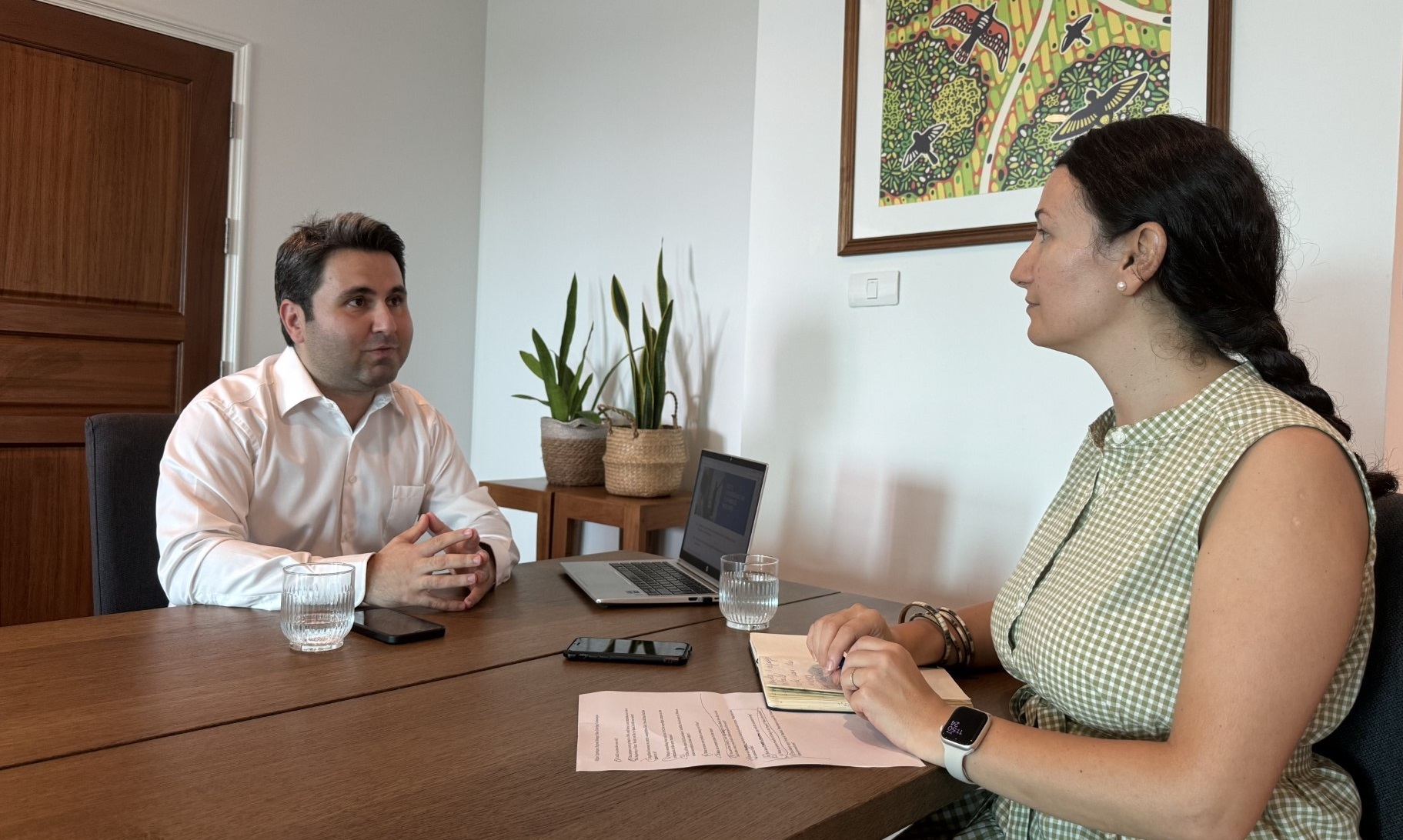
Olgun is being interviewed by our writer Bojana Bles.