
“Dreaming big has no boundaries. Growing up in a small town in East Malaysia taught me that determination and equal opportunities can change live”
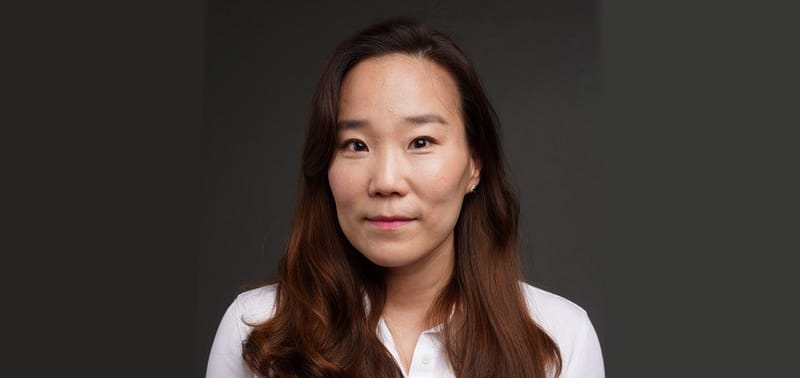
The challenges of growing up in a small town in East Malaysia did not stop Vivian Sia to dream big. The simple life in a small city, remote location, in the past, meant facing water shortages and power outages, she defied the odds to create a better world for herself and her family. As a firm believer in equality – regardless of race, religion and gender – Vivian would go on to lead an inspiring organisation that is dedicated to women in agriculture.
You get a sense there’s more work to be done to truly achieve equality as Vivian spoke about the challenges facing women leaders, especially in agribusiness. From her modest upbringing in Kuching, Sarawak, Vivian then worked hard to graduate in Canada and she later landed a job with the Singapore government in promoting international trade. This defining move got her to be involved in, and eventually lead, an organisation called WOMAG, which is a network of professionals who are committed to connecting women in agribusiness across Southeast Asia. ‘Our mission is to accelerate the development of women leaders in the agribusiness industry by providing opportunities for networking, knowledge-building and professional development’, says Vivian.
What motivated you to become a leader of Womag?
‘It’s a privilege to be the president of such an amazing organisation. Our network is made up of volunteers that conduct activities, programmes and events targeted at professional women in the agri and food sectors. We encourage them, we inspire them, we help them. We teach them that they shouldn’t let anybody tell them they are not good enough. If they give up, then they have already lost. But if they keep trying, success will follow.’
How difficult is it to be a woman leader?
‘It is still relatively challenging. As a society we are doing some amazing things, just look at us, we are sending people out to space, yet back on Earth we are still discussing about gender equality. It’s just something that we must deal with on a daily basis. Unconscious biases are real. For example, people would perceived woman to be working in a supporting function or less senior level as we recently heard it from an event that we organised. You walk in to any company and you see a woman dressed in a skirt and high heels, why is it so hard to think that woman might actually be a boss or leader herself?
How do we change that perception?
‘It will take some time. We first need to change the practice of double standards. For example, if a woman who is a boss and has her own opinion, she would be labeled as aggressive or bossy, to put it mildly. On the other hand, if a male boss has his own opinion, everyone will be like ‘Wow! This is a true leader!’. I’m sorry, but this is just not acceptable. So, once we begin to do away with these double standards, we can then see women as true leaders. This is the first step on the journey to change the flawed perception of people assuming women can’t be as good as men.’
It’s already difficult enough for women to work their way up, but what about other genders? What about people with disabilities?
‘The challenges these diverse communities face are increasingly gaining the visibility they deserve. It’s not only about men and women, but there are also other genders and crucially, there are people with disabilities, who we tend to often ignore. When we are born, we can’t choose to be born with a desirable figure or look. If we could then this world would be crowded with perfect looking and healthy people, but that’s not how life works. Imagine if you were born with some kind of disability, you are generally discriminated from birth. I’m grateful to be able to see, talk and even breathe, but some people must navigate challenges you or I never have to even think about.
Many years ago, a chairman at one of the largest agri businesses, said how his company is doing more to include people with disabilities and he reminded all of us that we shouldn’t forget about disabled people. That struck me. People with disabilities can contribute toward many things, but we are not creative nor innovative enough to make an environment for them, all they need is a safe place where they can shine and contribute to the same goal as others. We talk a lot about how we need to be more inclusive, it’s time to stop talking and start doing.’
“Singapore is a place for everyone”
Let’s talk about women in agriculture. What are some things women can do better than men?
‘Good question. Let’s talk about some basic agricultural activities, I can think of, is the collection of shea nuts in Africa. Shea nuts grow in the wild, they can’t be cultivated. Women will go into the forest, collect these nuts, and bring it back home for safekeeping. When they need money, they will sell it. If not, they will use it for medicinal purposes. This is a long-standing business practice that has been the domain of women, because women have been conditioned to see beyond their own needs towards the needs of a larger community.’
Agriculture is a long-term business without immediate results. How do we engage women on farms?
‘In Indonesia for example, the largest agricultural region in Southeast Asia, we often see women doing farm work without monetary returns. Especially in rural areas, we see women wake up early in the morning, go to the farm, do the work there, come back home, take care of the kids, cook, then do house chores. They can’t seem to separate work and life, it’s just not possible. Not to mention that the work they do often doesn’t pay nor does it feed the family.’
So how do we change that perception?
‘Education. We encourage corporate entities to work with the local governments in educating these women. Education is the only way out of poverty. We need to educate them on how to farm efficiently – to install modern technology, which seeds to use, how to use harvesting tools, and how to run their farms like the business it is. When women in the rural areas gain agricultural education, can you imagine what can they do with their piece of land? Education can help them do better, and in turn improves living standards for society at large. Food shortage will have a tremendous impact on our society. Surely these things take time, but time is also a luxury that we cannot afford these days. There needs to be more action.’
You are a Malaysian expat living in Singapore. How has it been?
‘I am fortunate to be able to live and work in Singapore. Singapore has positioned itself as a country for everybody, open to people from all over the world. Meritocracy is a value that strongly rooted in Singapore. Race and religion are not an issue. If you can do the job, you can contribute and Singapore will say you are welcome here. You don’t see that often in other countries, that’s why Singapore is a place for everyone. On the other hand, it is a highly competitive society – it gives you opportunity and if you are willing, you work hard and with some luck, you will be rewarded. Hence, it is so important to have an organisation like WOMAG where it provides a safe environment for all to share their views and collaborate actively for the good of the agribusiness community.’
How did Kuching and Singapore shape you into the person you are now?
‘What I always carry with me is something that I learnt growing up in my kampung, which is also deeply engraved in Chinese culture – respect. Respect towards elderly people. Respect towards your peers and the young. My parents insisted on molding me this way. My father was also a key figure for me, he always reminded me that I must know what I want in life, and my mother taught me how to be more adaptable and resilient. When you do good, good will come to you. Singapore on the other hand has shown me opportunities and endless possibilities.’
What is the best advice you can give your daughters?
‘Never to give up. Life can be challenging, but giving up should never be an option. Keep on trying. And along your journey, don’t forget to smell the roses. Of course, be a bigger person!’
Does the idea of living and working in Asia for an extended period of time appeal to you? If so, send us your details so we can consider you for future opportunities or apply for one of the current vacancies.