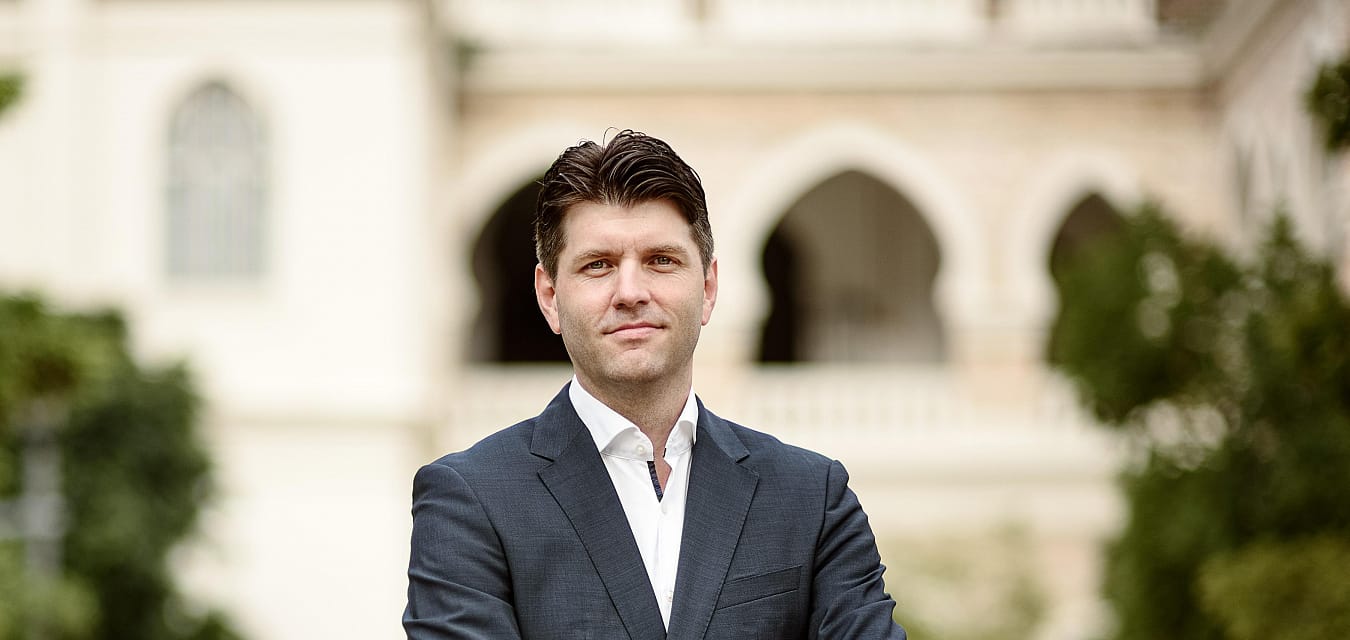
Jaap ten Have – Managing Director, Nomilk2day Asia
After six years of growth in Europe, Nomilk2day is taking its next step into the wider world, spurred on by a number of existing agrifood customers who are also active in Asia. Managing Director Jaap ten Have provides an insight into his activities for Nomilk2day Asia from his base in Kuala Lumpur (Malaysia).
jaap ten have - managing director
Besides having a strong drive to find successful matches between candidates and employers, headhunting firm Nomilk2day also has ambitious goals of its own. Nomilk2day has achieved rapid growth over the past five years, and opened a new office in Eindhoven just last year. Now, in 2022, the company is spreading its wings even further afield – to Kuala Lumpur, to be precise. Dutchman Jaap ten Have has been working in agribusiness in Asia for eight years, most recently in a business development role. Before moving to Asia, he owned a recruitment agency in the Netherlands.
Can you tell us more about the expansion plans?
‘Nomilk2day Asia is a further extension of the activities of Nomilk2day Headhunters specifically here in Asia-Pacific, which is a massive region. In just a couple of decades from now, five billion mouths will need feeding here and there will be many more people in the middle class. Much of their extra wealth will be spent on food: our customer segment. Asia is a real growth region with huge potential. As a result, many of our European customers are already active in Asia. They regularly ask us whether we can support their local subsidiaries with our recruitment services – and now we can.’
What’s happening in Asia, business-wise?
‘Asia has had a huge growth spurt in the past 20 years. Education has improved considerably and there have been some changes in the way of thinking. As a result, there is a lot of talent here and businesses are growing. There are lots of big and also innovative companies here in Asia with European ambitions. For example, Singapore is well known for its alternative meat industry and vertical farming, while there are numerous food companies in Indonesia. Executive search covers all of those areas and more.’
Is Nomilk2day’s concept the same in Asia as in Europe?
‘The Nomilk2day approach is successful, so we don’t see any reason to make drastic changes. But we’ve tweaked it slightly, of course, because it won’t work if we simply copy/paste the European concept. Most importantly, we’re adapting our approach to the local culture, preferences and communication style.’
What’s your goal with Nomilk2day Asia?
‘We definitely want to make a splash – not necessarily in terms of our size, but as a company that really brings something new. Five years from now, I hope that we will be the leading headhunter in Asia for agrifood and the food industry. I also hope to have a team of people around me including a number of consultants to help me with our market development activities, as well as various people supporting us in the office. So yes, it’s an ambitious growth plan but I also believe it’s doable. By the way, I’m not on my own until then. I currently receive day-to-day operational and search support from the team in the Netherlands.’
You sound pretty confident. What makes you so sure that this venture will be a success?
‘There are two reasons. Firstly, I know that international corporates based in the Netherlands are enthusiastic about us also being able to help them recruit competent professionals here in Asia. That is mutually beneficial and will also expand our network. Besides that, my market analysis has revealed that – as a specialist – Nomilk2day has a unique competitive position in Asia.’
One aspect of your work as a headhunter is supporting expats. What are your key takeaways for people who are considering this step for the first time?
‘When supporting expats, my main priority is to ensure that the candidates know where they stand and to manage the expectations. Needless to say, I also explain the best way to prepare for certain things. I often encounter instances of miscommunication due to cultural differences; people sometimes don’t understand one another properly, but prefer not to admit it. There are ways to get around that, such as repeating what the other person has said during a conversation to check that you understood it correctly. In fact, asking lots of questions and listening carefully is always a must.’
Do you have any tips in terms of living in Asia?
‘If expats have children, I always advise them to start by finding a good school and then to look for accommodation nearby. You don’t want to have to battle the traffic for an hour every day on the way to school. It comes in handy to know these kinds of things beforehand. And once you’re settled, my advice is to integrate and participate in the community as quickly as possible.’
Participation sounds like good advice, but how do you do that in an unfamiliar culture?
‘The most important thing is to be open to new contacts and experiences. In my first year in Malaysia I hung out a lot with the Malaysian owner and his friends – mainly because I didn’t know anyone else and didn’t come across many other internationals, but it was my best move ever! Thanks to playing sports, eating, drinking beer and partying together with them, I quickly learned a lot: the language, what you should and shouldn’t say, and seemingly small but very significant details. For example, when you’ve finished eating food of a banana leaf, it’s very important how you fold the leaf. If you do it wrong, you’re actually signalling that you didn’t like it or that you’re going to a funeral. That can attract some pretty strange looks! Those kinds of things gave me a head start and helped me to adjust fairly quickly.’
You’ve been living in Asia for quite a while now. Do you feel at home?
‘I initially intended to stay for just a year, but that was eight years ago and I don’t have any plans to leave. I live with my Malaysian wife in a suburb of the capital city, Kuala Lumpur, and a I speak a little Chinese, Malay and a few other languages. Because I don’t spend all my time in the expat bubble, I know how the locals interact. I really love it here... the culture, the people, the food, the weather, the travelling. It’s all fantastic.’
And what about your social life? How do you spend your free time?
‘I do a lot of sport. In fact, I’ve just got back from the driving range. Besides golf, I enjoy playing tennis, swimming, cycling, running, occasionally going to the gym, and I like playing football and go-karting with friends. My group of friends includes both locals and internationals: Spanish, Germans, Dutch, Malaysians and Japanese. It’s a really fun mix of different cultures!’
Does the idea of living and working in Asia for an extended period of time appeal to you? If so, send us your details so we can consider you for future opportunities or apply for one of the current vacancies.