
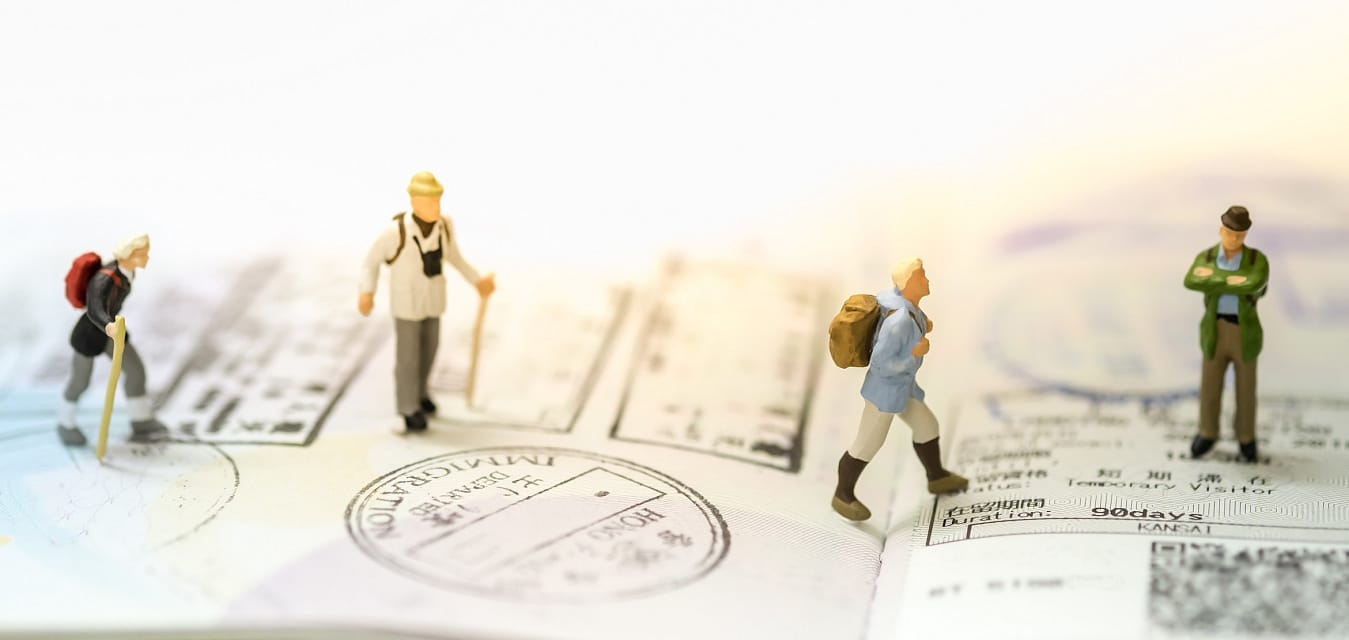
“Living abroad is not just about discovering new countries and cultures. It’s about discovering yourself, embracing change and creating memories that will stay with you forever.”
Living and working in another country for an extended period of time can provide lots of highs, but also some lows. Former expat and Asia fan Sophie Bosch-van Doorn has drawn on her own experiences to publish a guide that helps prospective expats to prepare for the adventure emotionally as well as practically. Here, she discusses feeling anxious, the dip after the ‘honeymoon period’, the right mindset and all the benefits of expat life.
How does living abroad change your life?
Sophie Bosch-van Doorn knows from first-hand experience that an assignment abroad has a big impact on your life. Having previously spent some time living in Thailand as part of her studies, Sophie gave up her banking job in the Netherlands to follow her partner to Indonesia and subsequently to Hong Kong, India and France. She wrote the guide called ‘Happy around the Globe Guide- 10 Principles for Happiness and Success when living Abroad’ based on those experiences and her numerous encounters with other expats. In the guide, she focuses in particular on the emotional side of expat life because, in her experience, that is one aspect many people are ill-prepared for: “Moving abroad for an extended period of time has a big impact on everyone involved – on people’s relationships, on the accompanying partner’s career, on family members who are left behind, and then there’s the culture shock... It’s pretty intense. My book is aimed at guiding prospective expats through that process.”
Asia is your favourite part of the world. Why?
“I have a personal click with many Asian countries. I love the climate, the food, the culture... I get a sense of enrichment from many of the countries that I’ve visited in Asia. It’s also a very diverse continent. For example, India is totally different from Hong Kong, Indonesia or Thailand. I also like the fact that almost everyone speaks English in Asia, unlike in France, where we also lived for a while. Learning a new language was a bit of an issue for me personally, but other people might see it as a bonus. You need to think carefully about things like that beforehand.”
What makes Asia such a good destination for expats?
“Asia is a fast-growing region where a lot is happening, plus things are well organized for expats – there are international schools and there is good healthcare, for example, and most people speak English. Besides that, it’s a beautiful area with lots of amazing vacation destinations within easy reach. And because of the large number of expats, especially in the major cities, there’s a very international feel. That can come in handy, because there are some quite strong cultural differences so it can be a challenging experience. Although Asian countries are really fun and interesting, most Westerners still tend to fall back on their own culture. Almost every expat destination has expat groups where you can meet people who are in the same boat and come from a culturally similar background.”
You describe it as challenging. Is everyone capable of stepping out of their comfort zone for an expat adventure?
“Everyone can take the step, but they should also be willing to put in the necessary effort. If you can picture yourself living and working somewhere, you should just go for it. Sure, you will come up against all kinds of practical issues, but nothing that can’t be solved. If the mere thought of it makes you feel anxious, don’t do it. When it comes to these kinds of major changes, it’s best to listen to your heart.”
Which Asian country is a good place to start?
“Many expats call Singapore ‘Asia light’ – it’s an ‘easy’ expat destination. In contrast, an assignment in India is seen as more of a hardship. It’s a personal thing, of course. Singapore will be too ‘normal’ for some people if they are looking for a challenge and are keen to immerse themselves in local life rather than the expat community. It varies from person to person; some people will struggle to settle anywhere, but the majority simply love the expat lifestyle.”
What’s the most common reason you hear for becoming an expat?
“Many people are looking for adventure, but other reasons include career opportunities, to enhance their studies, to change their lifestyle or simply because they want to live in a different climate. But it often tends to be a work-related step. Wanting to escape is not a good reason, because you always take yourself with you and you’ll face the same struggles, just somewhere else. It’s better to have a positive drive and actively want to live in that particular country, because emigrating is a stressful event. Everything changes: work, your surroundings and your friends. It’s important to realize that it’s not the same as being on vacation. Whereas you might like the relaxed attitude of the locals while you’re on holiday, you could find it challenging when you work there. On top of that, other things suddenly seem more important, such as good education, good healthcare, good transport links and affordable travel tickets so that family and friends can come and visit you.”
‘Well begun is half done’, as the saying goes. Can you share any tips to help people prepare well?
“Start by reading up on the country you’re going to so that you know how things work there and are aware of the cultural differences. Then, take care of the practical matters. That considerably increases your chance of success. Find somewhere to live, and if you have children find a conveniently located school. The distance might seem doable in theory, but if it’s a 90-minute drive in rush hour traffic in practice you will soon regret it. People sometimes underestimate that. In other words, make things as easy as possible for yourself because you will come up against enough other hurdles while living in an unfamiliar country.”
‘It’s easy to make friends quickly in the expat world’
That doesn’t sound very encouraging.
“You’re embarking on a great adventure, but it’s important to realize that it’s not all fun and games, and also that each expat goes through the same phases. Initially you’re still in the honeymoon phase and everything is fantastic. That’s followed by a dip, but you can get through it – especially if you can talk to some like-minded people who understand what you’re going through.”
So what kind of mindset works best?
“Flexibility is important. Everything changes, things are done differently than you’re used to and you’re bound to find yourself in unexpected situations. Therefore, it helps if you can keep an open mind. Be mindful and enjoy the little things in life, such as the delicious food, the lovely weather or the mangoes growing in your garden.”
Overall, would you say that the benefits make it all worthwhile?
“Absolutely! It’s a privilege to experience what it’s like to live in a different country. It’s an adventure – that feeling of being truly alive and having so many amazing new things to discover. It also makes you see your home country in a new light and you appreciate both countries more. Personally, I frequently felt really happy while living abroad. It’s just a really cool experience! You sometimes end up in crazy situations, but at least they result in some interesting anecdotes. In your home country your life just ticks along, but when you live abroad you have lots more highs. And yes, you have some lows too, but you’re making memories that will stay with you forever.”
What did you personally learn from all your experiences?
“They broadened my world view. Because I’ve seen more of life, I can relate to more things better. For example, I am now much more aware that people are largely shaped by where they come from, which means that I’m quicker to be more understanding.”
You now live in the Netherlands again. What do you miss about being an expat?
“What can I say? It’s another life. Before you know it, you’re back in the rat race. The Dutch are big fans of planning; there’s little room for spontaneity. That’s different in Asia. Additionally, it’s easy to make friends quickly in the expat world – there’s a sense of community. You try to hold on to all that when you return home but you can’t, which is a shame. I sometimes miss the person I was when I lived in Asia, and I’ve heard that a lot of former expats feel the same.”
Does the idea of living and working in Asia for an extended period of time appeal to you? If so, send us your details so we can consider you for future opportunities or apply for one of the current vacancies.