“The future of food is not just about producing more, but about producing smarter and more sustainably. By connecting Dutch innovation with global challenges, we can create a better food system for generations to come.”
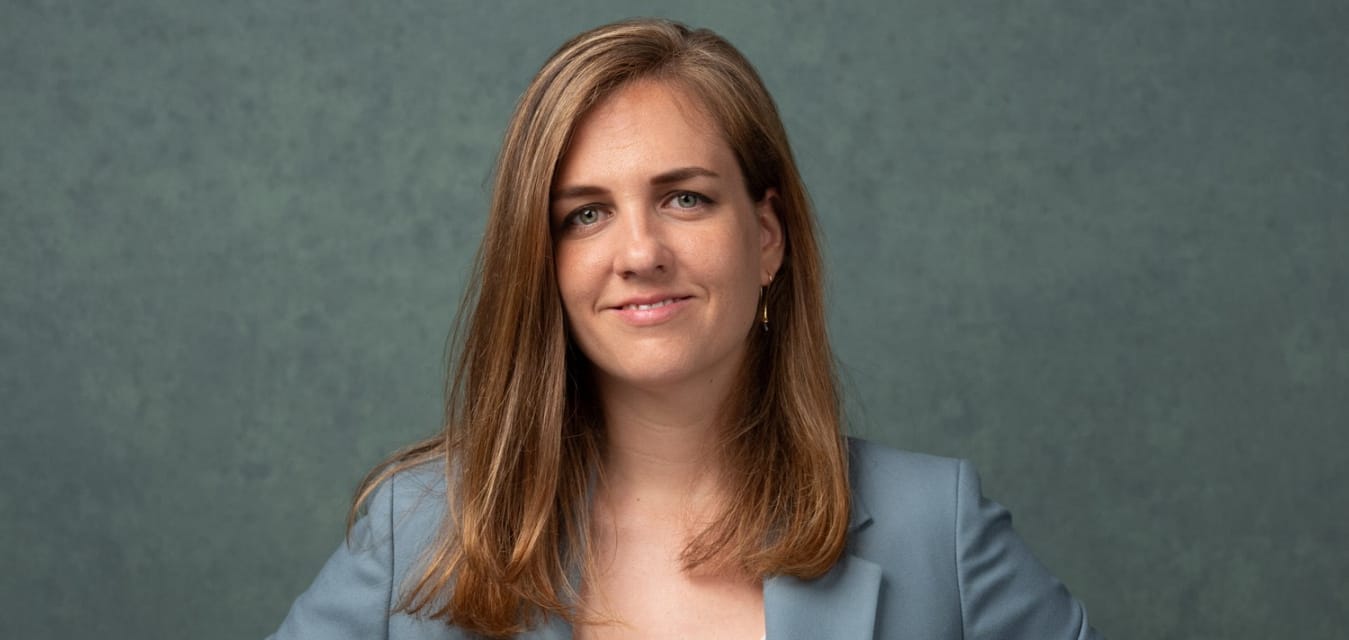
Balancing the demands of a successful career and the needs of her family – while living abroad – is something Emilie Rost van Tonnigen has learned to do exceptionally well. This charming Dutch mother-of-two has found her home in Singapore where she currently works as an Agricultural Advisor at the Embassy of the Kingdom of the Netherlands.
Emilie Rost van Tonningen - Agricultural Advisor
Emilie was pursuing a career in marketing when an opportunity to venture into the field of sustainability arose. It was a big career switch yet in-line with her passion for sustainability, which also involved moving halfway across the world to Singapore. That was 5 years ago. Emilie has since graduated from the National University of Singapore with a master’s degree in Environmental Management and became a mother to two children. She is currently representing Dutch interests in agriculture, nature, food safety and security. ‘In addition to regular agricultural trade, there is a particular focus on bringing Dutch horticulture solutions and alternative proteins products and technology to Singapore.’
What is the sustainable food challenge that you’re working on?
‘The challenge right now is to increase the local food production in Singapore from less than 10% currently to 30% by 2030. The Singaporean Government calls this the 30-by-30 strategy, and my role is to complement this effort by bringing Dutch food technology and expertise to Singapore. This will ensure Singapore not only achieves greater stability in its national food security, but also enables a drastic reduction of greenhouse gas emissions as transport throughout the value chain is significantly reduced.’
What kind of Dutch technologies are implemented in Singapore?
‘One showcase example is the vertical farm of Urban Farming Partners, which consists of a group of experts who all installed their own proven Dutch technology. The farm uses the floating water system of Dry Hydroponics, which basically grows crops on water instead of soil. Other technologies include Priva, which is a climate and water control system, as well as Signify that uses LED lightning for daylight-free growing. The farm is completely aligned with Singapore’s 30-by-30 strategy as it delivers fresh local produce within a 28-day growth cycle. We’re obviously very proud to be able to contribute to the national food strategy with these amazing Dutch technologies.’
How accurate is the quote: “The Netherlands feeds the world”?
‘The Netherlands is the world’s number two agricultural exporter, second only to the USA, which has 270 times more landmass. As such, the Netherlands plays a vital role in the global food transformation programme to increase food production for a growing world population. What we’re seeing now in Singapore is a shift in interest from traditional import of products to import of Dutch technology and know-how in horticulture, which enhances local food production. This trend is accelerated by global disruptions in supply chains caused by the Covid-19 pandemic and the current war in Ukraine, which shows that international food systems are incredibly vulnerable. Such disruptions underline the criticality for countries to become more food independent, to which Singapore is no exception.’
Nowadays, we often see eco-friendly fruits and vegetables, packed in plastic packaging in supermarkets. These two don’t seem to go together. Can something be changed here?
‘The irony is that plastic drastically improves shelf life of fresh products, and by keeping the food fresh, it significantly reduces food waste. Plastic packaging is proven to be successful because of its extreme durability. And while this is a fantastic feature for food conservation, waste packaging has been piling up because of limited opportunities for proper disposal and recycling of plastics. This is of course a global issue and what needs to change is a drastic reduction of food packaging and an increase in facilities for recycling and waste recovery. This boils down to the 3R principle of Reduce, Reuse, Recycle. Another thing that needs to change is consumers’ perception, so if we wish to reduce our plastic packaging then we should accept that food can’t always look as perfect as how it is displayed in the average supermarket.’
You’re also working on the global transition from animal-based proteins to alternative proteins?
In 2020, Singapore became the first country in the world to approve the consumption of cultured meat. The cultured chicken of Eat Just has been available in a few restaurants in Singapore ever since. The Netherlands has more than 50 initiatives for startups, government programs and research organisations contributing to the global protein transition. At the Dutch Embassy, we’re supporting these initiatives in their journey to bringing their products or research to Singapore. For example, there are two major upcoming food events this year in Singapore, both with an extensive focus on novel foods. So, we’re actively looking for opportunities for Dutch organizations at these events.’
Agriculture is considered a male industry. Do you agree?
‘I’ve never considered it a male industry. According to the UN Food and Agriculture Organization, on average women represent 43 per cent of the world’s agricultural labour force with a vast majority being smallholder farmers. So the idea that the food and agricultural business is not a women’s industry is, in my opinion, a misconception. Moreover, the food industry is changing. Many ladies are attracted to the industry because of sustainability reasons, just like me. I believe that the current global push for a more sustainable food system will attract more women to the sector.’
How did you realize agriculture was something you would want to build your career in?
‘Agriculture was not an interest I had in mind when I started my career. Prior to moving to Singapore, I predominantly worked in marketing and process improvement related projects in the private sector. Yet I always had this desire to work on sustainability, which is my passion. Our move to Singapore provided an opportunity to pursue that desire. I took my time to explore the field of sustainable development and I did multiple work assignments in addition to studying for a master’s degree in Environmental Management. Through these experiences, I was able to narrow my interest down from the broad sense of sustainability to sustainable land management with a particular interest in agriculture, which also fits well with my personal lifestyle choice of an eco-conscious diet. So over the years, my career path developed rather organically towards my current job. Although recently, someone joked that it must have been in my blood all along as I was born in the Dutch Eastland, an agricultural region focused on horticulture.’
Living in Singapore or living in the Netherlands?
‘Living in Asia is such an adventure, and it has allowed me to achieve many of my personal goals simultaneously. Frankly, I don’t know how I could have achieved that while living in the Netherlands. Singapore is a great place for families with lots of facilities for young children, including dedicated childcare at home by an excellent domestic helper. That’s something that makes life much easier here. Furthermore, I enjoy the tropical climate that provides so many opportunities for outdoor activities. We love to bike or hike and explore the Botanic Gardens or the nearby rainforest. We enjoy our lifestyle here and we feel at home in Singapore. But the Netherlands will always be home to me, so it’s delightfully convenient to have a job that allows me to touch base with my home country on a daily basis.’
Does the idea of living and working in Asia for an extended period of time appeal to you? If so, send us your details so we can consider you for future opportunities or apply for one of the current vacancies on nomilk2day.asia.nl